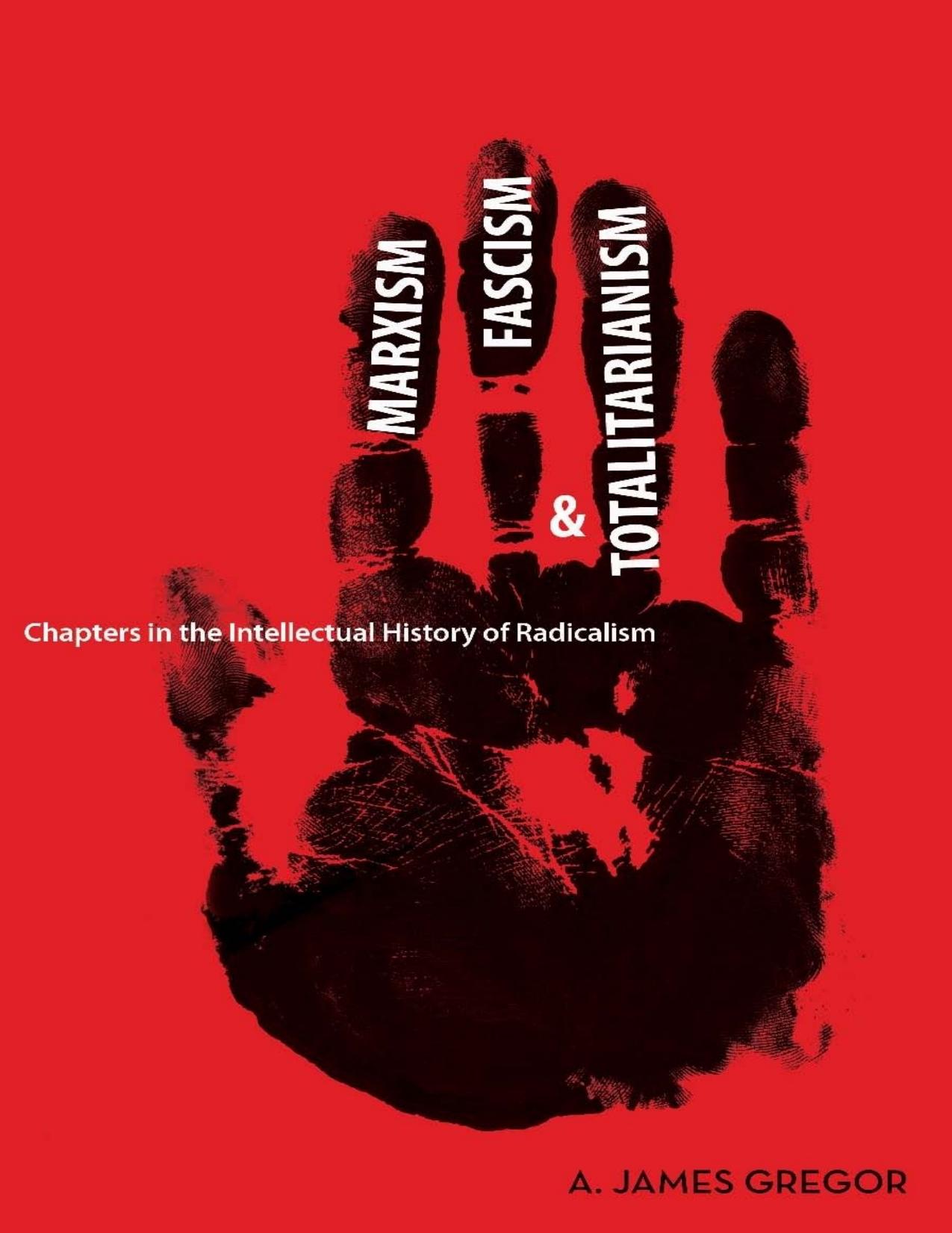
Marxism, Fascism, and Totalitarianism: Chapters in the Intellectual History of Radicalism - PDFDrive.com by Gregor A. James
Author:Gregor, A. James
Language: eng
Format: epub, pdf
Publisher: Stanford University Press
Published: 2011-07-31T00:00:00+00:00
material and moral issues animated Italians and signaled momentous decisions to be addressed in the not-too-distant future.
All the elements that together made up the syndicalism of the first years of the century reappeared in the “proletarian nationalism” Michels identified in 1913.
He made a case for a revolutionary nationalism that would inspire an historic people to restore an ancient grandeur by infusing them with an ethic of labor and sacrifice, calculated to sustain a program of rapid industrialization and economic growth. The moral imperatives would be “proletarian” because Italy, as a nation, suffered all the disabilities Marx had identified with all those who labor. Italy, in its entirety, was “proletarian.” Its opponents were “plutocratic.”
By the time of the Italo-Turkish War of 1911, the most radical of Italian syndicalists had put together all the components of a revolutionary ideology, rooted in Marxism, but transformed by the thought of Sorel and all those Italians he had swept up in his vision. For all its prefigurations found in the work of intellectuals like Michels and Olivetti, how comprehensive the ideology of revolutionary syndicalism had become only became apparent with the coming of the Great War.
FILIPPO CORRIDONI, THE ARCHANGEL OF
SYNDICALISM
There is perhaps no better manner with which to illustrate the doctrinal developments among Italian revolutionary syndicalists in the period between the War in Tripoli and the First World War than to trace them in the thought of the young Filippo Corridoni. He was called, by those who admired him, the
“tribune” and the “apostle” of labor, and after his death, the “archangel of syndicalism.” In the years following the Great War, it was his name the first Fascists invoked in order to signal something of the character of the revolution they sought.
Born on the nineteenth of August in 1887, in the town of Pausola, in the province of Macerata, he was the son of a foundry worker, from whom he inherited the sentiments that made him a Marxist at the age of seventeen,52 and a revolutionary syndicalist at twenty. A voracious reader and an ardent orator, he very quickly rose in the ranks of the revolutionary labor movement, to provoke the abiding concern of the authorities. After his first arrest in 1907, he spent the next eight years in and out of Italian prisons and in episodic exile.
His publications throughout this period are distinguished only insofar as they reflected standard syndicalist argument. His Riflessioni sul sabotaggio was a
rationale for the employment of sabotage in the defense of the interests of the urban proletariat53—the publication and distribution of which cost him a period of confinement for the advocacy of violence against persons, property, and the state.
There is nothing in these essays that would distinguish Corridoni’s thought from that of any number of other revolutionary syndicalists.54 Only in the months of Italy’s indecision, after the outbreak of the Great War, and before Rome’s commitment to the Triple Entente in May 1915, did Corridoni give expression to those doctrinal statements that were to render him the herald of Fascism.
Download
Marxism, Fascism, and Totalitarianism: Chapters in the Intellectual History of Radicalism - PDFDrive.com by Gregor A. James.pdf
This site does not store any files on its server. We only index and link to content provided by other sites. Please contact the content providers to delete copyright contents if any and email us, we'll remove relevant links or contents immediately.
Personalized inhaled bacteriophage therapy for treatment of multidrug-resistant Pseudomonas aeruginosa in cystic fibrosis by unknow(214153)
CONSORT 2025 statement: updated guideline for reporting randomized trials by unknow(102519)
Critical evaluation of the ProfiLER-02 study design and outcomes by Vivek Subbiah & Razelle Kurzrock(102042)
Cardiac gene therapy makes a comeback by Oliver J. Müller & Susanne Hille & Anca Kliesow Remes(101836)
Whisky: Malt Whiskies of Scotland (Collins Little Books) by dominic roskrow(74617)
Unveiling the design rules for tunable emission in graphene quantum dots: A high-throughput TDDFT and machine learning perspective by Şener Özönder & Mustafa Coşkun Özdemir & Caner Ünlü(51000)
A yeast-based oral therapeutic delivers immune checkpoint inhibitors to reduce intestinal tumor burden by unknow(40371)
Covalent hitchhikers guide proteins to the nucleus by Alexander F. Russell & Madeline F. Currie & Champak Chatterjee(40295)
Meet the Authors: Christopher R. Mansfield and Emily R. Derbyshire by Christopher R. Mansfield & Emily R. Derbyshire(40204)
Alkaline-earth metals promote propane dehydrogenation with carbon dioxide through geometric effects: Altering the reaction pathway by unknow(32813)
Induced iron vacancies boosting FeOOH loaded on sustainable Fenton-like collagen fiber membrane for efficient removal of emerging contaminants by unknow(32609)
Efficient electric-field-assisted photochemical conversion of methane to n-propanol exclusively over penetrated TiO2Ti hollow fibers by Guanghui Feng(32528)
Bi2SiO5 nanosheets as piezo-photocatalyst for efficient degradation of 2,4-Dichlorophenol by Hangyu Shi & Yifu Li & Lishan Zhang & Guoguan Liu & Qian Zhang & Xuan Ru & Shan Zhong(32465)
A novel NDIPTA organic heterojunction photocatalyst with built-in electric field for efficient hydrogen production by Jiahui Yang & Baojun Ma & Yongfa Zhu(32438)
Enhanced conversion of methane to liquid-phase oxygenates via hollow ferrite nanotube@horseradish peroxidase based photoenzymatic catalysis by Jun Duan & Shiying Fan & Xinyong Li & Shaomin Liu(32404)
Ordered macroporous superstructure of defective carbon adorned with tiny cobalt sulfide for selective electrocatalytic hydrogenation of cinnamaldehyde by Xiao-Shi Yuan & Sheng-Hua Zhou & San-Mei Wang & Wenbo Wei & Xiaofang Li & Xin-Tao Wu & Qi-Long Zhu(32332)
What's Done in Darkness by Kayla Perrin(27246)
Topological analysis of non-conjugated ethylene oxide cored dendrimers decorated with tetraphenylethylene: Insights from degree-based descriptors using the polynomial approach by A Theertha Nair & D Antony Xavier & Annmaria Baby & S Akhila(26628)
Investigation of mechanical and self-healing properties of hydroxyl-terminated polybutadiene functionalized with 2-ureido-4-pyrimidinone by Mohsen Kazazi & Mehran Hayaty & Ali Mousaviazar(26554)
